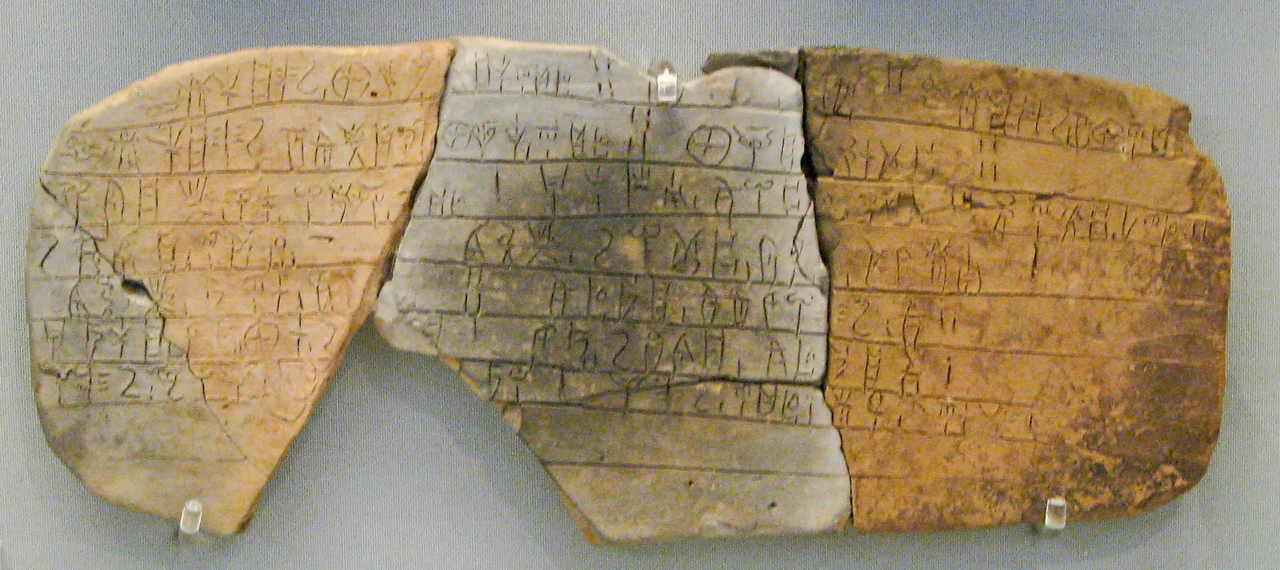
The corpus
A decipherment proposal needs a documented set of objects: photographs or drawings, provenance, dates, sign sequences, direction and uncertain readings. The sign inventory itself is an analysis when damaged forms may be variants of the same sign. Publish enough data that another scholar can repeat the count and challenge a classification.
Patterns before translations
Look for recurring sign groups, their positions, possible numerals and repeated names before assigning a language. A proposed value should work across inscriptions, not only on an attractive selected phrase. Cuneiform sign lists illustrate a general caution: one graphic sign can have several readings, so a simple one-sign-one-sound assumption may fail.
Anchors
A bilingual or parallel text can supply a powerful external constraint. The Rosetta Stone connected a known Greek version with Egyptian versions of a decree, yet the correspondence still required analysis rather than mechanical letter matching. Names, dates and grammatical patterns can be additional anchors when independently established.
Modern-language examples on this page clarify a linguistic pattern. They do not establish unattested sounds or forms for an ancient language. Follow the cited sources below and keep editorial readings separate from the surviving trace.