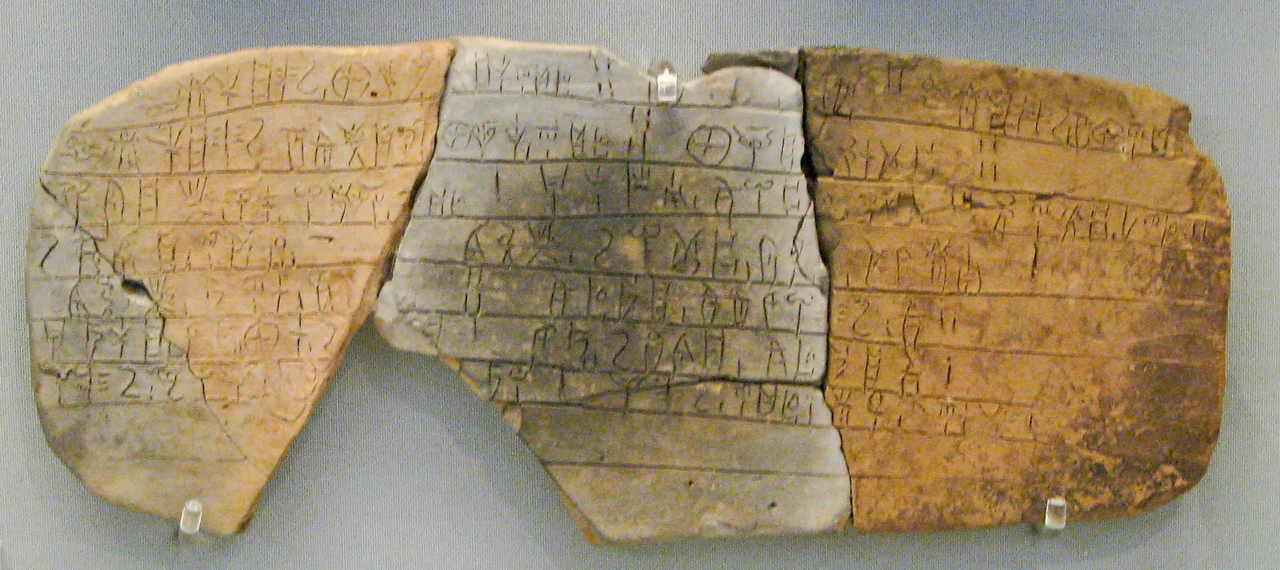
The witness
A witness is the surviving object or copy that carries text: a tablet, inscription, manuscript or printed edition based on one. Record its material, provenance if known, date range, damage and line numbering. One literary work can have several witnesses that disagree. An edition is an argued representation of them, not the object itself.
The layers
Keep six layers visible: image or facsimile; identification of signs; transliteration; normalized or segmented form; grammatical and lexical analysis; translation. Each move adds interpretation. On the Rosetta Stone, a Greek section can guide the Egyptian reading, but the shared decree is not a word-for-word key to every line.
Uncertainty
An unreadable trace is not the same as a lost surface, and neither is the same as a legible sign with an uncertain value. Oracc marks missing, damaged and queried readings distinctly. Write the uncertainty at the layer where it occurs; do not hide it in a fluent translation.
Modern-language examples on this page clarify a linguistic pattern. They do not establish unattested sounds or forms for an ancient language. Follow the cited sources below and keep editorial readings separate from the surviving trace.