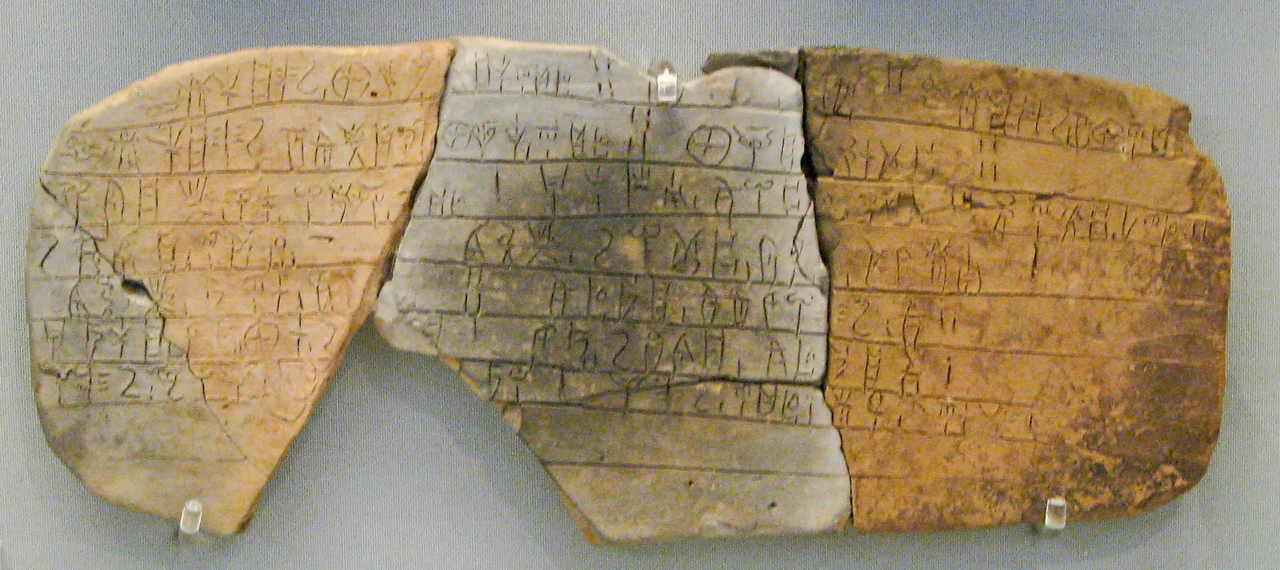
The written trace
Palaeography studies historical forms of writing. A sign is not only a Unicode character or a shape in a printed font: it is a trace made by a particular tool, hand and surface. A wedge pressed into clay, ink absorbed by wood and a stroke cut into bone preserve different details. The Vindolanda tablets, for example, are thin wooden sheets written in ink. Before naming a difficult letter, describe the visible strokes and what the material may have lost.
Comparison
Compare difficult signs with nearby signs by the same hand first. Then widen to dated objects of similar region, material and script style. An elegant monumental inscription and a hurried cursive letter are poor one-to-one shape matches. Sign lists can show standard forms and permitted variants, but a school model is not a photograph of the object in front of you.
Dating and limits
Letterforms can support a date range when compared with securely dated material. They rarely prove an exact year. A copied text can preserve old-looking forms, and a local workshop may differ from a metropolitan norm. Record what is observed, which comparisons were used, and how much chronological precision they justify.
Modern-language examples on this page clarify a linguistic pattern. They do not establish unattested sounds or forms for an ancient language. Follow the cited sources below and keep editorial readings separate from the surviving trace.