Cognacy is historical
Cognates descend from a common ancestral form. Establishing the relationship requires regular sound correspondences across several candidate words, plausible morphology and a history consistent with the languages involved. Similar-looking words alone are not enough; short forms are especially easy to match by chance. A semantic match is also necessary to discuss, but a near-identical English gloss cannot substitute for sound correspondences.
A dictionary may print a cross-reference to a related form or an etymology with a question mark. Preserve that confidence marker. The entry’s etymology answers a historical question; its sense section addresses attested uses in the language of the text. Even a secure etymology cannot decide which sense a polysemous form has in a sentence.
Borrowing
A loanword enters through language contact. Evidence may include unusual sound patterns, a restricted social or technical domain, chronology and a plausible contact setting. Direction matters: an older attestation in one language may support a hypothesis, but survival of texts is uneven. In cuneiform, a Sumerian sign or logogram in an Akkadian text is not automatically proof that a Sumerian word was pronounced there as a spoken borrowing. Separate graphic practice from lexical history.
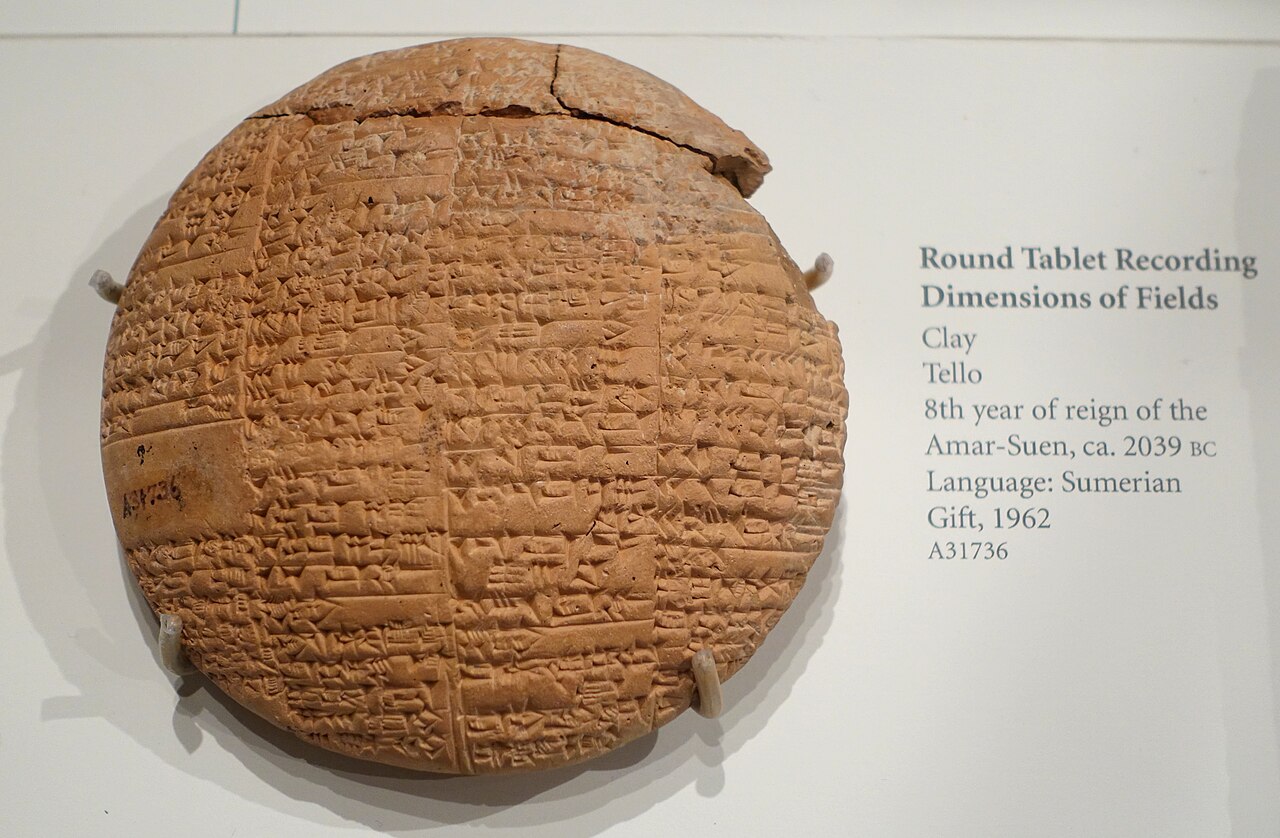
The DCCLT describes Sumerian–Akkadian bilingual lists and cuneiform sign lists. These are a useful exercise in caution: a sign may have several readings, while an Akkadian column may translate a Sumerian written item. The relationship between written equivalence, spoken word and historical borrowing must be argued rather than assumed from the parallel layout.
False friends
Forms in two languages may resemble one another while having different meanings or no historical connection. The safest reading method is to establish the local form and sense before consulting cross-language comparisons. Record every proposed cognate or loan with the specific dictionary or article that argues for it; do not present an attractive resemblance as a settled historical fact.
Practice
Find an entry with a proposed cross-language comparison. Copy only the short forms needed to discuss it, keeping each script and transliteration distinct. Identify the proposed direction or ancestor, the sound correspondences cited, the chronology and the question mark if present. Then explain why this comparison cannot alone translate an occurrence in your text.
Modern-language examples on this page clarify a linguistic pattern. They do not establish unattested sounds or forms for an ancient language. Follow the cited sources below and keep editorial readings separate from the surviving trace.