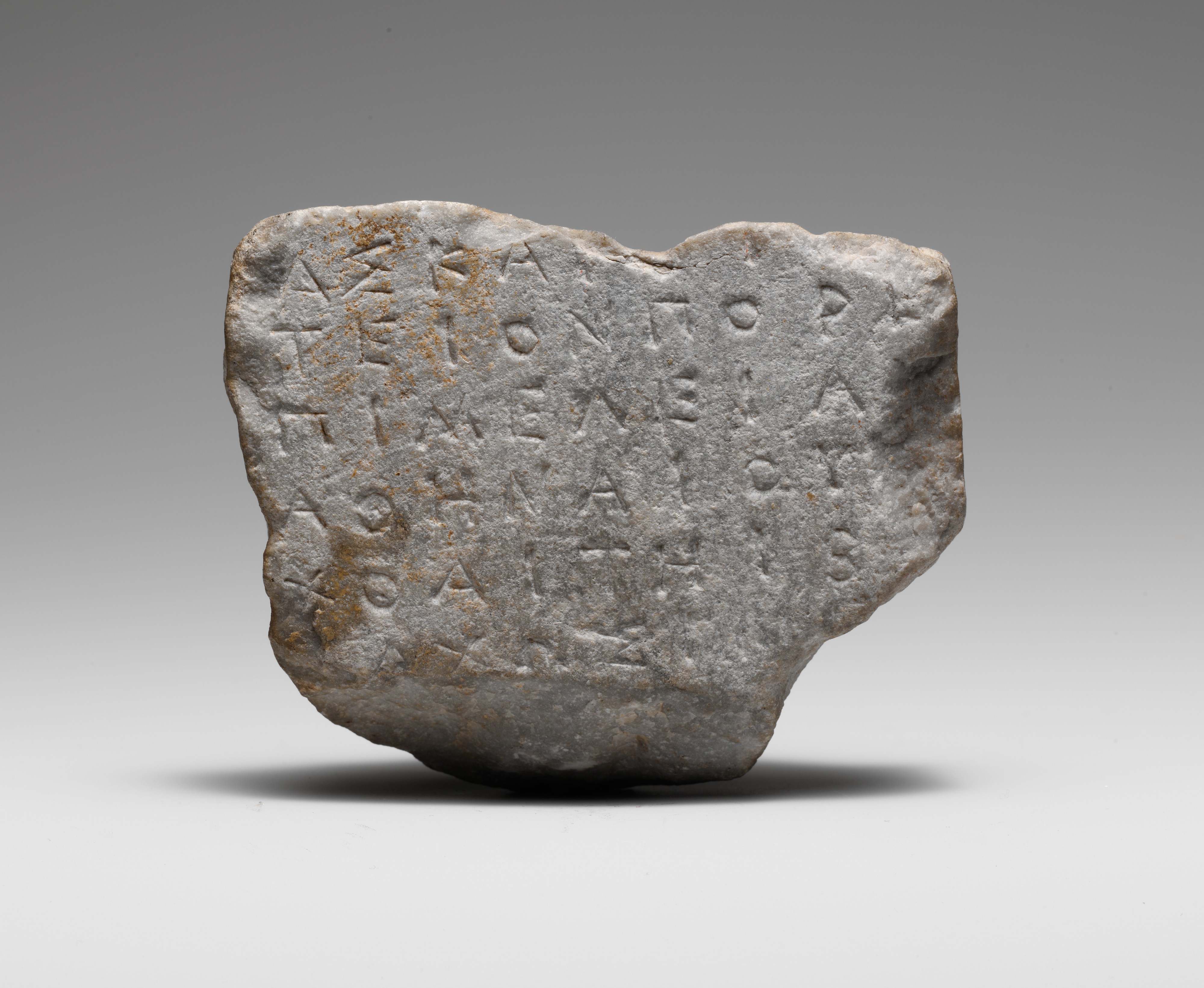
Stress
Stress is relative prominence of a syllable in a word or phrase, often realized through combinations of duration, intensity, pitch and vowel quality. IPA [ˈ] marks primary stress and [ˌ] secondary stress before the relevant syllables. Some languages have predictable placement; in others a stress difference can distinguish words. A printed acute accent may represent stress, tone, vowel quality or an editorial convention, so check the grammar and period before treating it as IPA stress.
If a text lacks stress marks, morphology and metre may still constrain position. Later grammatical traditions may preserve useful evidence, but they have dates and may reflect a later stage. Do not write a narrow stress transcription for every ancient word merely because a teaching grammar supplies a pronunciation.
Tone and accent
Tone uses pitch contrasts associated with syllables or morphemes. Yoruba's three level-tone comparison in WALS is a compact modern demonstration; many languages combine tone with consonantal and vowel contrasts. A pitch-accent analysis may designate one prominent pitch-bearing position, but terminology and analyses differ. The IPA includes tone letters, accent diacritics and contour marks; they are alternate notations for aspects of pitch, not extra vowel phonemes.
Tone can interact with grammar, downstep, sandhi and intonation. A lexical tone may surface differently in connected speech. Therefore, transcribing a word alone and transcribing a sentence need not show identical pitch marks. In historical work, tone may be inferred from accentuation, meter or daughter-language correspondences, but uncertainty should remain visible.
Intonation and phrasing
Intonation organizes pitch over phrases and utterances, including boundary movements and pragmatic meaning. IPA marks minor and major groups and global rises or falls, but their interpretation requires a discourse context. Punctuation in an edition is often modern and does not recover the ancient speaker's exact contour. When a page offers a reading aloud, distinguish a plausible teaching performance from a documented historical pronunciation.
Modern-language examples on this page clarify a linguistic pattern. They do not establish unattested sounds or forms for an ancient language. Follow the cited sources below and keep editorial readings separate from the surviving trace.