Syllable structure
A syllable commonly has a nucleus, typically a vowel, with an optional onset before it and coda after it. In [kæt] “cat”, [k] is onset, [æ] nucleus and [t] coda. The nucleus and coda together form the rhyme in many analyses. The symbol [.] can mark a boundary between syllables, but where a consonant belongs may be disputed; morphological boundaries and language-specific rules can matter. A syllabic consonant [n̩] can itself form a nucleus.
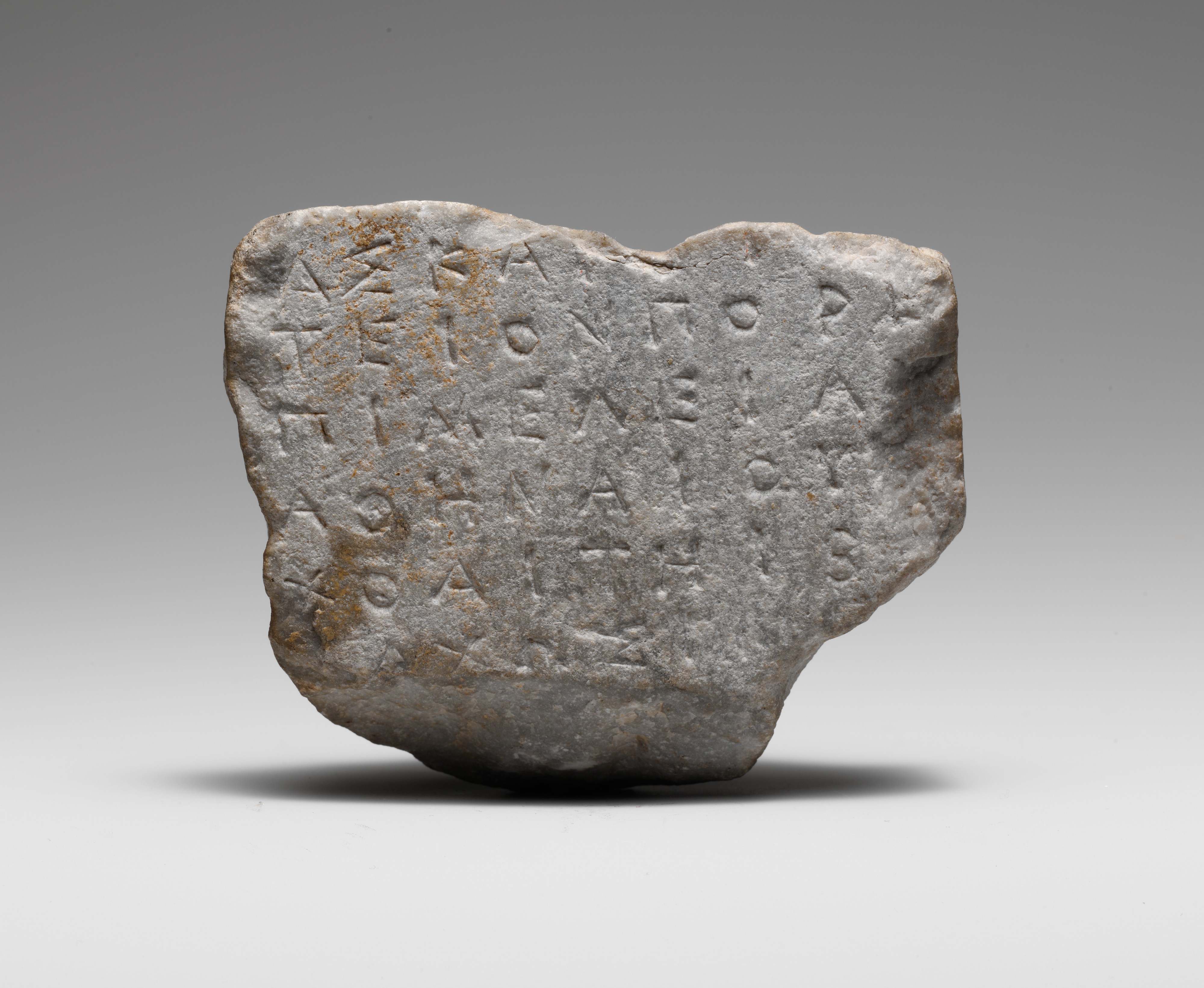
Phonotactics describes which segments and sequences a language allows in particular positions. English permits /str/ at the start of many words but not every possible permutation of those three consonants. Restrictions are language- and period-specific. A writing system may fail to represent permitted clusters: Linear B's open-syllable signs led scribes to omit or spell out consonants, and ti-ri-po represents Greek /tripos/ “tripod” in the cited scholarly analysis. Orthographic segmentation is not directly syllabification of the spoken word.
Sonority and exceptions
Sonority is a relative prominence or openness often used to model syllable structure. Many onsets rise toward a vowel and many codas fall away from it. This is a tendency, not an iron law: clusters and syllabic consonants require language-specific treatment. The introductory textbook gives Georgian forms with complex clusters as a caution against treating familiar English syllables as the universal template.
When working with an ancient text, distinguish a proposed syllable boundary from a written sign boundary. A syllabary's graphic unit may not be identical to a phonological syllable; a meter's quantity rules may depend on position, not simply on what an alphabet writes. State whether an analysis is phonetic, phonological, orthographic or metrical.
Length, morae and metre
A mora is a unit of syllable weight in analyses of many languages. A short vowel may contribute one mora and a long vowel two, but coda contributions and stress interactions vary by language. Ancient verse can preserve patterns of heavy and light positions that constrain hypotheses about vowel length or syllabification. It does not provide a sound recording. Competing scansion, dialect and performance traditions must be considered before treating a metrical position as proof of one phoneme.
Modern-language examples on this page clarify a linguistic pattern. They do not establish unattested sounds or forms for an ancient language. Follow the cited sources below and keep editorial readings separate from the surviving trace.