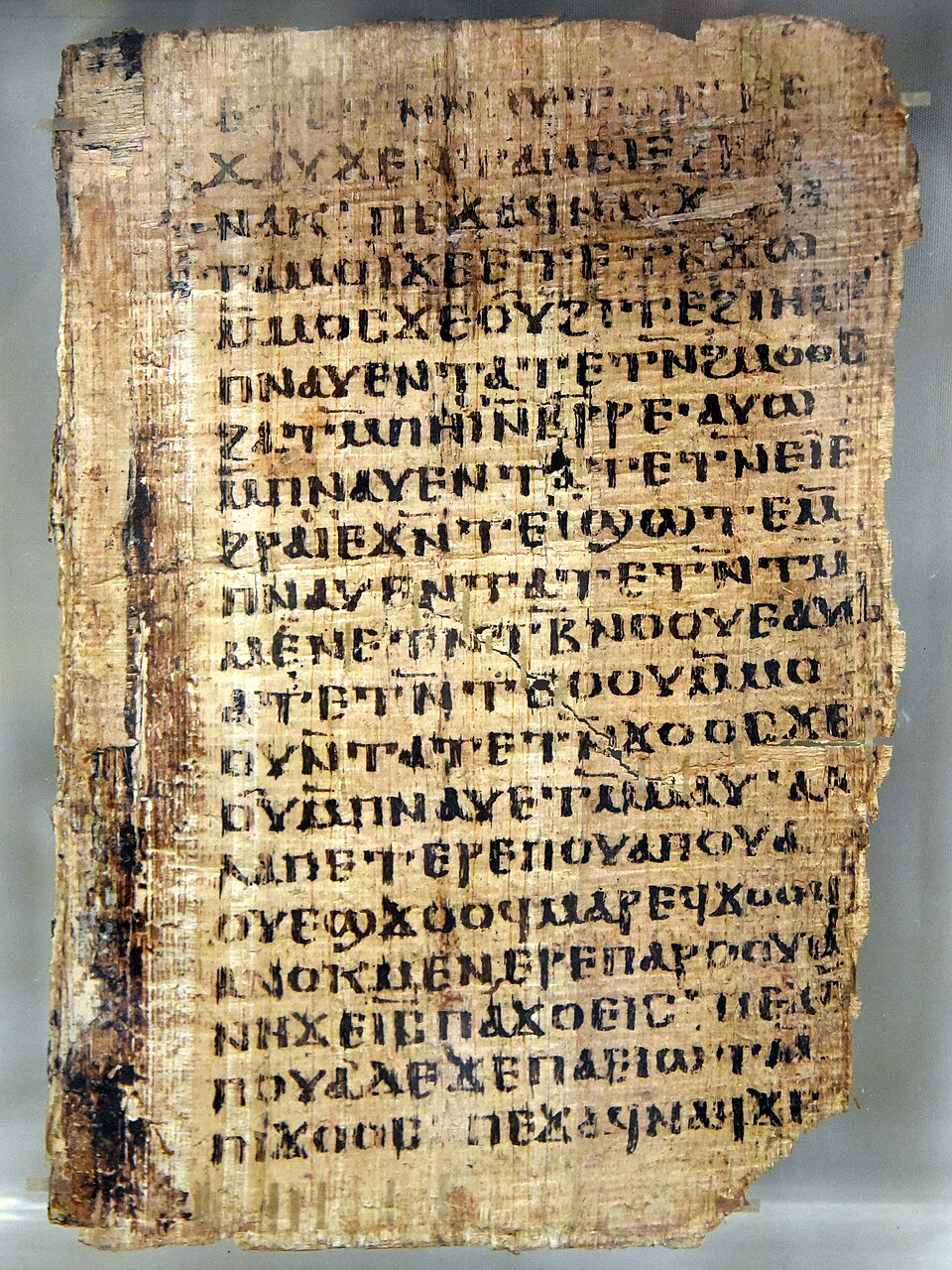
Coordination
Coordination links units of comparable syntactic status: words, phrases or clauses. The connective may correspond to English “and,” “or,” or “but,” yet its distribution and discourse force must be checked in the source language. A paired construction can mark both members, while a single postpositive particle may mark a relation to what precedes. Greek μέν … δέ is often translated as a contrast, but Smyth records a range from strong antithesis to a light transition. Do not delete such particles from an analysis simply because the English sentence reads naturally without them.
To find the coordinated units, test which elements belong to each member and which are shared. A verb before two noun phrases is not automatically a coordination of two clauses; conversely, a second clause may omit repeated material. Punctuation in an edition may guide reading, but the surviving text and grammatical pattern carry the argument.
Ellipsis and recoverability
Ellipsis is the omission of material understood from construction or context. In a historical text, a missing word can also mean physical damage, scribal error, formulaic abbreviation or a deliberately unexpressed argument licensed by grammar. These are different states. Square brackets in an edition may restore lost letters; an analyst’s silent “understood verb” is a syntactic proposal. Keep them in separate notation. A treebank may attach a surviving word to a reconstructed syntactic head for annotation purposes, but its tree does not create another attested token.
Before supplying an elided element, ask where the reader obtains it: from the preceding clause, from agreement, from a genre formula or from a parallel copy. If a sentence makes sense without a recoverable word, perhaps the grammar licenses a nonverbal predication instead.
Anaphora and reference
Anaphora connects a pronoun, demonstrative or omitted argument to something already available in discourse. A pronoun’s closest noun is not necessarily its referent. Number, class, case, agreement, semantic fit and the passage’s topic all constrain the choice. In narrative, speakers and narrators have distinct perspectives; “here” or “this” inside quoted speech can refer to the quoted speaker’s setting, not the inscription’s findspot.
A translation can resolve an ambiguous pronoun to a proper name, but the note should preserve the original expression and state why that antecedent is preferred. If two antecedents remain plausible, show both.
Practice
In a passage with two clauses, list every pronoun, omitted participant and connective. For each, write the proposed antecedent or shared material and the evidence. Distinguish textual loss from syntactic ellipsis. Then see whether the published translation has made any unmarked choice on the reader’s behalf.
Modern-language examples on this page clarify a linguistic pattern. They do not establish unattested sounds or forms for an ancient language. Follow the cited sources below and keep editorial readings separate from the surviving trace.