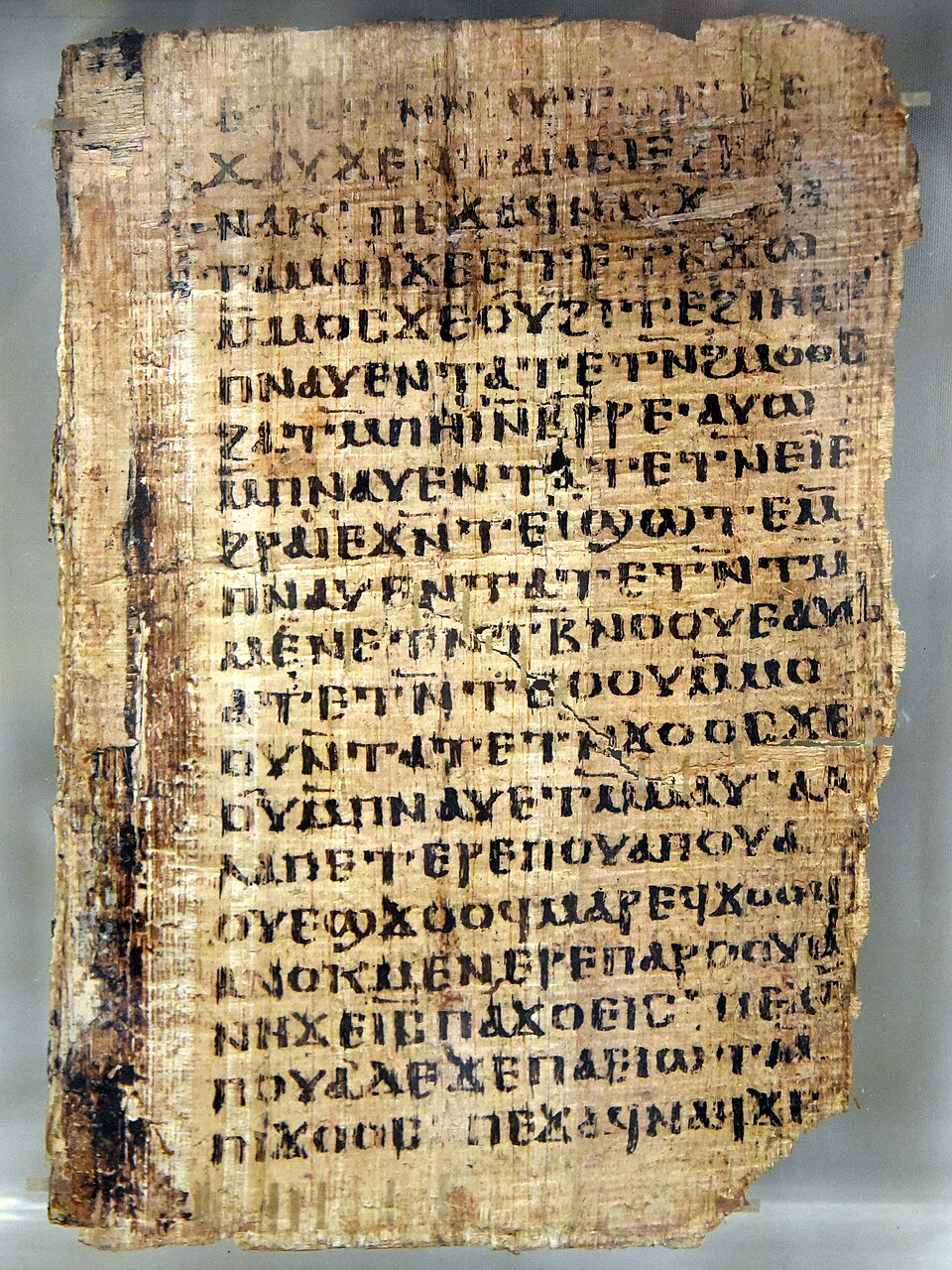
Beyond the single sentence
A sentence-by-sentence parse may miss how a text organizes information. A narrative introduces participants, tracks them with names and pronouns, shifts scene, marks quoted speech and distinguishes foreground events from background circumstances. An administrative tablet may instead use compressed formulas and lists. A royal inscription can favor titles and repeated epithets. These are not defects of grammar: genre shapes which constructions survive for us to analyze.
Mark the discourse boundaries that are physically present: line breaks, paragraph marks, rubrics or formulaic separators. Then distinguish the punctuation supplied by a modern editor. A tablet line and a grammatical clause need not coincide. A manuscript’s visible paragraphing can itself vary between witnesses.
Particles and connectives
A particle may express contrast, inference, emphasis, expectation or a transition rather than name a participant or event. Its effect often depends on the sentence before it. Smyth describes Ancient Greek μέν and δέ as postpositive particles often positioned near the elements being contrasted. An isolated μέν may leave an opposition implicit. That is why deleting a particle as “untranslatable” is a poor grammatical analysis even when the final English translation has no separate word for it.
Write the connective’s local scope: does it relate words, clauses or larger stretches of discourse? Check whether its position is fixed, whether it attaches phonologically to a host, and whether a parallel text omits it. Avoid assuming that every occurrence of a familiar particle bears one invariant English gloss.
Register and audience
Formal proclamations, personal letters, hymns and school exercises can differ in vocabulary and syntax within one language. A construction known from later literary prose may not explain an earlier dialectal inscription. Date every example and identify its medium and intended audience when possible. When a grammar describes a “standard” usage, read its corpus and period before applying the rule to a different text.
A bilingual document may show related content in two languages without line-for-line identity. Compare discourse function and genre first, and only then align clauses. Literal translation can conceal differences in topic structure, titles or formulae.
Practice
Read five consecutive lines rather than one extracted sentence. Track referents, connective particles and clause boundaries. Explain one translation decision that becomes clearer because of a preceding line, and one place where modern punctuation could have encouraged a different parse. Cite the edition’s line numbers and punctuation policy.
Modern-language examples on this page clarify a linguistic pattern. They do not establish unattested sounds or forms for an ancient language. Follow the cited sources below and keep editorial readings separate from the surviving trace.