Sumerian scholarship
DCCLT traces a long sequence from lexical lists used in teaching to later bilingual Sumerian–Akkadian reference works and scholarly interpretation. Its introductory account places the end of Sumerian as an ordinary spoken language near the close of the third millennium BCE, while copied lexical material and cultic uses continued for much longer. This is evidence for a durable learned practice. It does not prove that each later scribe pronounced Sumerian identically to an earlier native speaker.
The lists themselves changed. They accumulated translations and new scholarly uses; some later texts include Greek transcriptions. “Preservation” did not freeze a single unchanged object. Ask whether the manuscript is an elementary exercise, library copy, commentary or ritual text before interpreting its language. A copied old word and an innovative gloss occupy different evidential layers.
Latin and Romance
The Dictionary of Medieval Latin from British Sources explains that spoken Latin evolved regionally into Romance languages. At the same time, Latin continued as a learned language of writing, religion and scholarship, including in places where everyday languages were not Romance. “Latin died and Romance began” is too abrupt: differentiation and recognition developed over time, and formal Latin remained useful in new social settings.
The same Oxford project documents medieval Latin vocabulary and spelling changes. An open-access study in the Journal of Classics Teaching also discusses spoken learned Latin in medieval and Renaissance institutions. Thus “not a first language” does not mean “never spoken.” Identify whether a claim concerns children’s native acquisition, classroom conversation, formal speech, composition or the inherited Romance vernaculars.
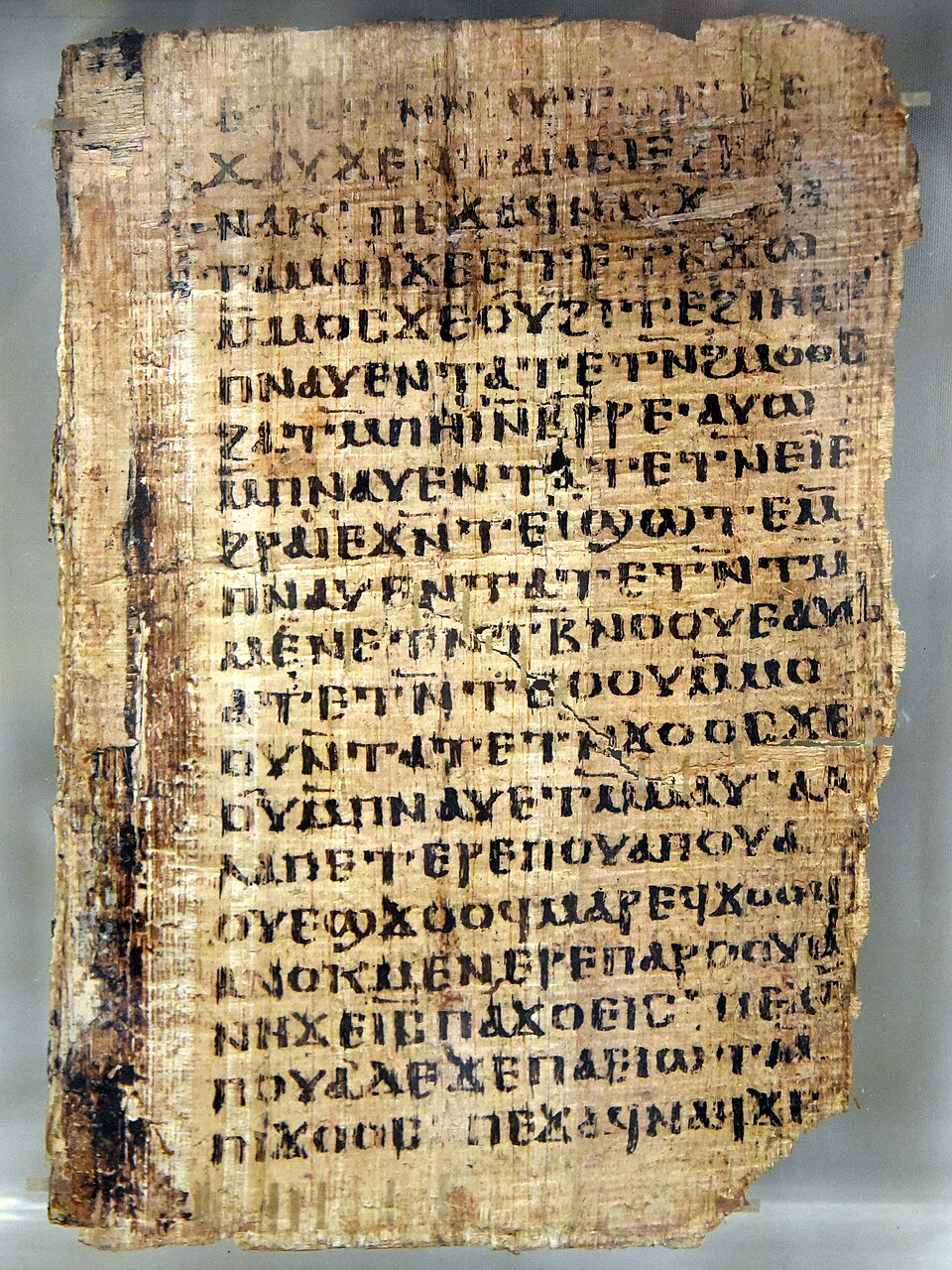
Coptic in religious use
The Unicode Standard states that Coptic, the late Egyptian language written in its distinctive script, ceased ordinary vernacular use while remaining a liturgical language among Coptic Christians. A liturgical text is active evidence of copying, reading and pronunciation in a community. It is not a direct record of the speech of earlier Egyptian households. Conversely, the end of ancient hieroglyphic writing predates this later liturgical life; the two end points must not be conflated.
Practice: build a four-column comparison for Sumerian, Latin and Coptic: family transmission, learned or ritual domain, surviving witnesses, and uncertainty about pronunciation. Add one sentence per case explaining why a manuscript date cannot alone date the loss of native speakers.
Modern-language examples on this page clarify a linguistic pattern. They do not establish unattested sounds or forms for an ancient language. Follow the cited sources below and keep editorial readings separate from the surviving trace.