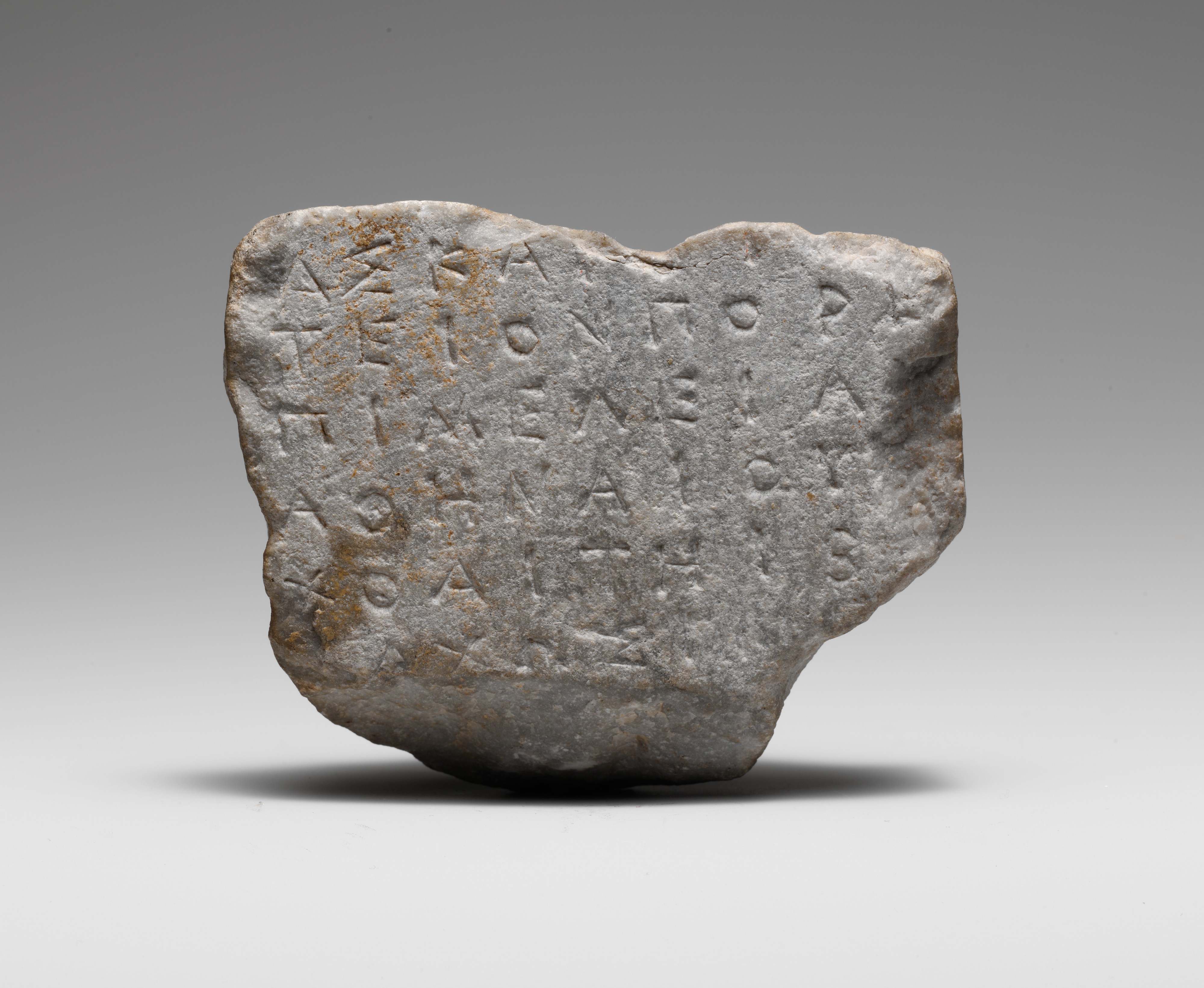
The recorded forms
The University of Texas Indo-European Lexicon lists Latin pater, Homeric Greek πατήρ, Sanskrit pitár-, Avestan pitar-, Old English fæder and Old Irish athir in its father entry. These are edited lexical forms from different periods, with distinct transliteration and accent conventions. The visible p of several branches corresponds to Germanic f in this set, while Old Irish begins with a vowel. That observation is worth explaining but cannot by itself establish a general law.
A comparison should begin by grouping related forms at the right depth. Old English fæder and later English father are stages along one Germanic line, not two independent branches voting for the same proto-sound. Likewise, several Romance forms in the lexicon descend through Latin and should not count as independent evidence for a Proto-Indo-European consonant. The branch labels in the source are an essential part of the data.
What the set does and does not prove
The p : f correspondence becomes persuasive when many unrelated meanings exhibit the same branch pattern and Germanic history accounts for it. Other changes in the word need their own analysis: the consonants after the first vowel, vowel qualities, stress and inflection cannot be recovered by substituting one English letter. The Texas entry provides a published reconstruction, but its exact phonological form is a scholarly analysis, not a form attested on an object.
Verner’s discussion of father, mother and brother adds an instructive caution. One correspondence can depend on the position of earlier accent. Sanskrit accent marks therefore matter to a historical explanation even where a modern English spelling does not record accent. Do not turn “Latin p equals English f” into an unrestricted character-replacement rule.
Practice
Use the Texas Lexicon to find two additional cognate sets with an initial Latin p and Germanic f. For each, record at least one non-Germanic and one Germanic branch, dates or stages, and any cited uncertainty. Then seek a set that would challenge the simple pattern. State whether a loan, a different environment, or a mistaken pairing best explains it.
| Branch | Form | Status |
|---|---|---|
| Italic · Latin | pater | Attested language; dictionary headword |
| Hellenic · Homeric Greek | πατήρ | Attested literary language; accented editorial form |
| Indo-Aryan · Sanskrit | pitár- | Attested language; cited stem with accent |
| Iranian · Avestan | pitar- | Attested language; cited stem |
| Germanic · Old English | fæder | Attested language; dictionary form |
| Celtic · Old Irish | athir | Attested language; dictionary form |
Modern-language examples on this page clarify a linguistic pattern. They do not establish unattested sounds or forms for an ancient language. Follow the cited sources below and keep editorial readings separate from the surviving trace.