Chronology as a constraint
An inscription’s archaeological context can make some identifications impossible. A proposed name must fit the date of the object; a proposed borrowed spelling must be possible at that time. Dates themselves can have different bases: excavation layer, palaeographic comparison, named ruler or calendar conversion. Keep the basis visible so that a reading is not used to date the object and then the date used to prove the same reading.
The Bīsotūn monument grew through stages, and its versions are not identical in every detail. The relative sequence of carving matters when comparing versions. A later copy or cast is evidence for an earlier surface only to the degree that its accuracy can be checked. Chronology can exclude a hypothesis, narrow it, or leave several readings open.
Prediction
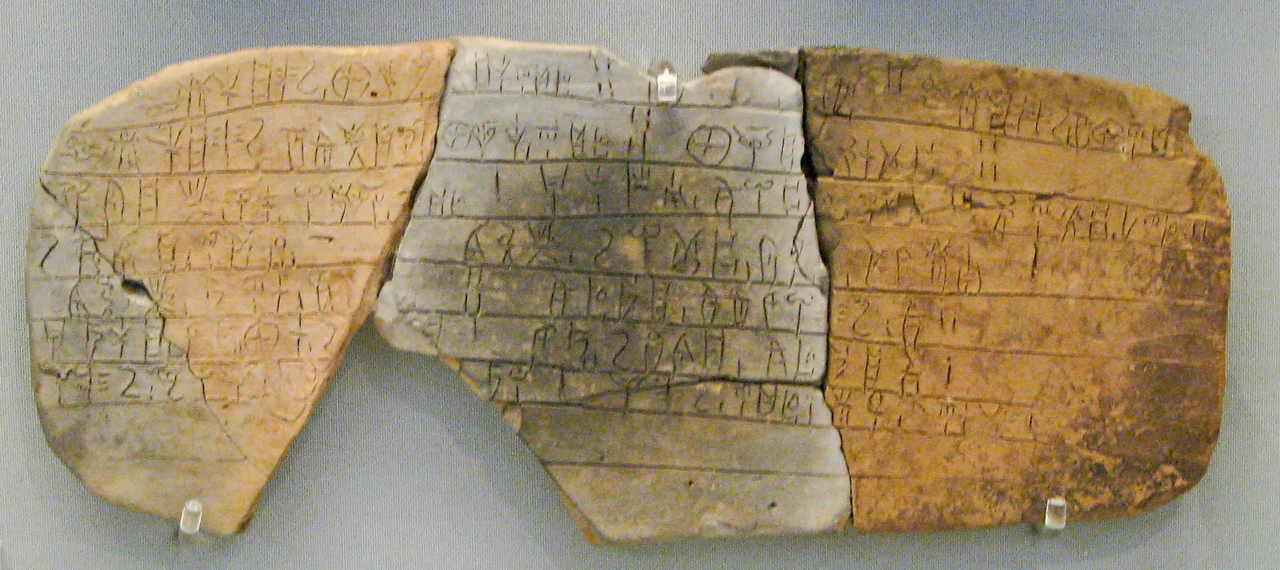
A decipherment must explain inscriptions beyond the examples used to invent its values. Publish a sign list and reading rules, then apply them to an independently documented text without revising values case by case. Check recurrent names and titles, grammatical distributions, quantities, and content against archaeological context. Ventris and Chadwick’s Greek reading of Linear B was tested on the expanding tablet corpus; Chadwick’s contemporary account stresses its application to new and unpublished material.
Not every sign has to be known for the core system to be convincing. Conversely, five fluent translations selected from a large corpus are weak if the rule cannot read the rest. State the number and type of unresolved signs, forms and contexts. A proposed translation that is flexible enough to fit any object makes no useful prediction.
Practice
Take one proposed sign value from a published decipherment account. Label the inscription that motivated it “discovery.” Choose a different inscription as “test.” Predict the second occurrence and its context before consulting its published interpretation. Record the outcome, including partial matches and failures.
Modern-language examples on this page clarify a linguistic pattern. They do not establish unattested sounds or forms for an ancient language. Follow the cited sources below and keep editorial readings separate from the surviving trace.