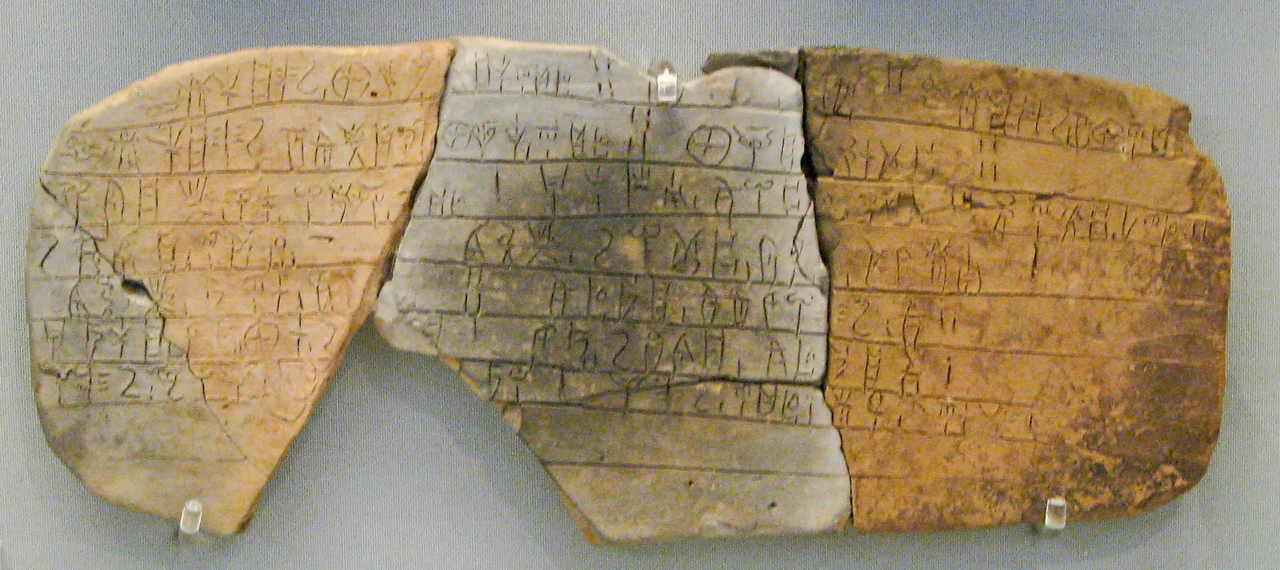
The evidence chain
Use separate fields for witness location, image or drawing, observed trace, diplomatic transcription, sign identification or transliteration, normalized form and word division, grammatical analysis, lexical sense, and translation. A field may be empty. The point is to see where interpretation enters. A damaged sign can be described as a physical trace without pretending that its phonetic value is known.
In Oracc’s Example 2, P348658, the ATF lines combine transliteration with flags for damage, uncertain identification and complete loss. Read those flags with the Primer beside you. TEI’s guidance on primary sources likewise distinguishes damage, unclear text, gaps and supplied text as different editorial claims.
Reversible revision
If a comparison changes your word division, retain the old segmentation and the reason for the change. Do not overwrite the diplomatic form. When a translation becomes more fluent, check whether it has concealed a supplied word or uncertain sign. Mark copied editorial readings and your own proposals by author; they should not look identical in a shared notebook.
A useful confidence note names the reason rather than assigning a bare percentage: “stroke visible in image,” “editor restores from parallel,” or “morphology allows two parses.” Confidence belongs to a particular layer, not to the entire passage.
Practice
Use P348658, obverse lines 1–3 in the Oracc Primer. For one marked place, separately record the editor’s ATF notation, the kind of physical uncertainty it signals, and what surrounding language might suggest. Do not supply a sign of your own without source support.
Modern-language examples on this page clarify a linguistic pattern. They do not establish unattested sounds or forms for an ancient language. Follow the cited sources below and keep editorial readings separate from the surviving trace.