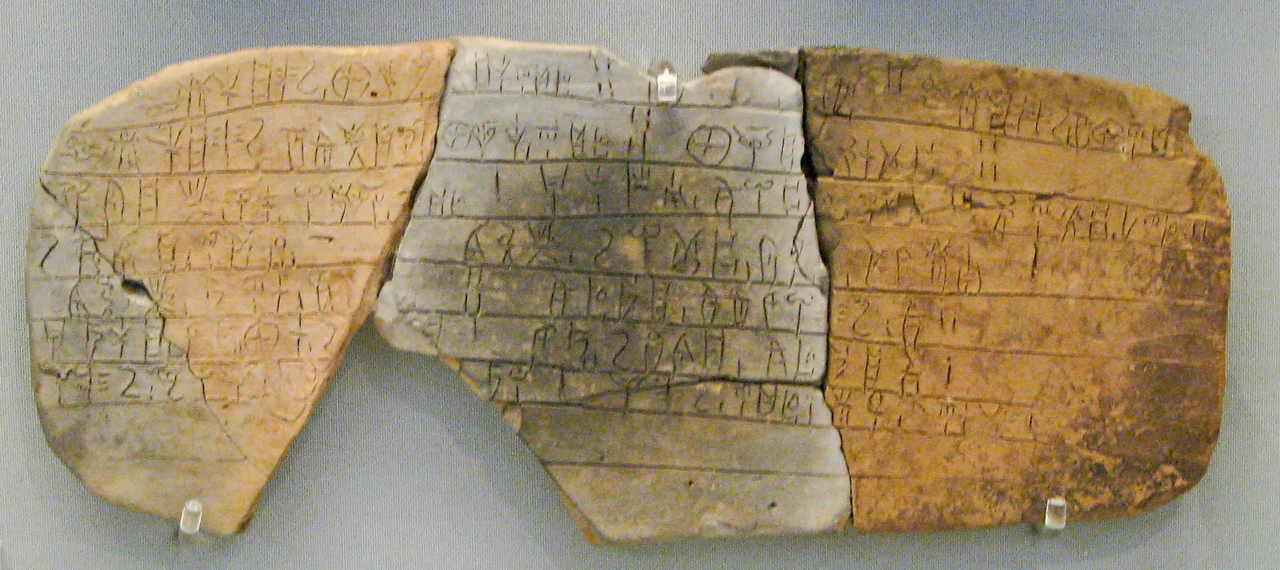
The edition record
Before taking a reading, record editor or project, title, publication or release information, URL or persistent identifier, date consulted, object or manuscript identifier, and exact passage. Record the editorial key. In a changing digital edition, note a displayed version or revision when available; an access date helps when no fixed version is exposed. If you use a translation, add its translator and publication separately.
Oracc’s Primer names its examples by a P-identifier and publication designation. The identifier locates the text record; the publication designation points to a scholarly edition. Neither substitutes for a line reference. In Codex Sinaiticus, a verse reference and a physical page location serve different purposes; retain both when relevant.
Editorial signs
Copy brackets, underdots, question marks, accents, diacritics and line boundaries as printed. Consult the project key. Papyri.info uses square brackets for lost text restored by an editor and underdots for visible but uncertain characters. In Oracc ATF, a hash after a grapheme marks damage, square brackets enclose broken-away signs, and a question mark queries a reading. Matching shapes across systems do not guarantee matching meanings.
A teaching grammar may normalize spelling or suppress editorial marks. Keep its citation, but also locate the source edition before treating the printed form as the ancient witness.
Practice
At Oracc’s Primer, copy the identifier, publication designation, surface and line number of Example 2, line 1. Identify its damage marker from the key. At papyri.info, find the definition of an underdot. Explain why these two conventions cannot become one generic “uncertain” symbol.
Modern-language examples on this page clarify a linguistic pattern. They do not establish unattested sounds or forms for an ancient language. Follow the cited sources below and keep editorial readings separate from the surviving trace.