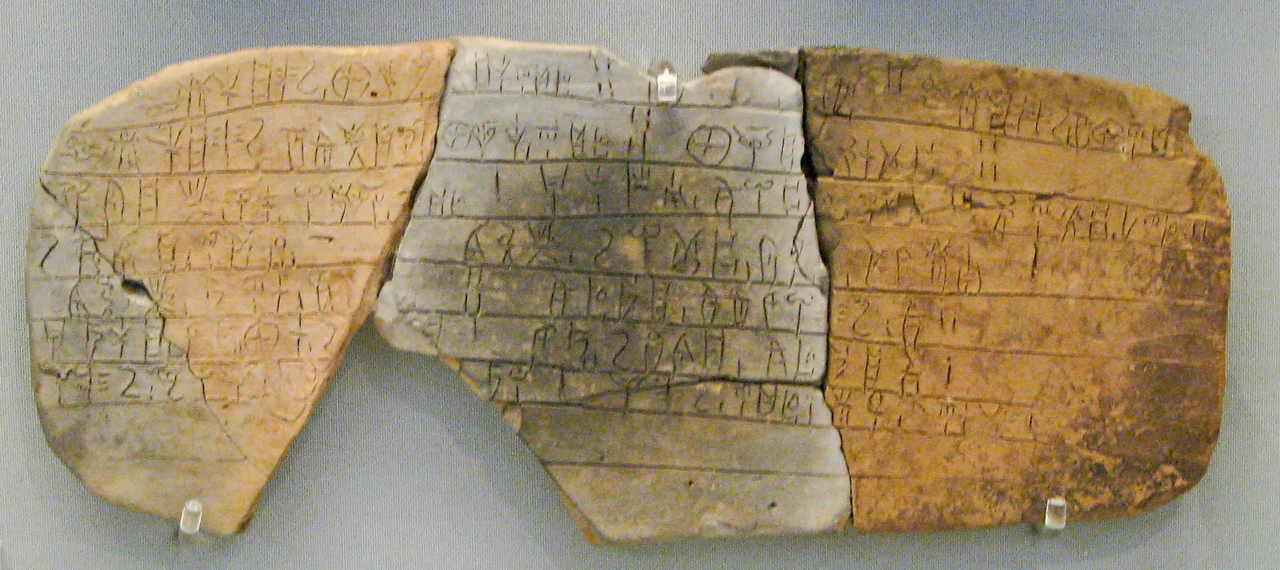
Material and layout
Record what carries the writing: stone, clay, wood, papyrus, parchment or another support. Note surface, columns, margins, breaks, erasures and visible changes of hand. These features can determine where a line begins, whether a letter is missing, and whether two marks were made together. Keep object description distinct from linguistic analysis.
The British Museum describes Vindolanda tablet 291 as an ink letter on wood written in two hands. A change of hand is evidence for that particular object, not a feature to infer from every digital text. The Rosetta Stone is broken and preserves unequal amounts of its three script sections; a smooth modern rendering cannot show that pattern of survival.
Page and view
For a codex, identify quire, folio, recto or verso, column and line using the edition’s numbering. The Codex Sinaiticus Project explains its page and verse views and how corrections appear. For a multi-image object, record view and orientation. A IIIF Manifest can describe an object and order its Canvases; an individual Canvas represents a particular view. An image URL alone may omit that context.
A digital photograph is a mediated view. Lighting, crop and resolution affect what you can see. Describe an ambiguous trace as ambiguous until another view or direct examination supports a firmer claim.
Practice
Open the British Museum record for tablet 291. Record collection number, material, writing technique, number of hands and edition reference. State which details come from the museum record and which, if any, you can independently see in its image.
Modern-language examples on this page clarify a linguistic pattern. They do not establish unattested sounds or forms for an ancient language. Follow the cited sources below and keep editorial readings separate from the surviving trace.