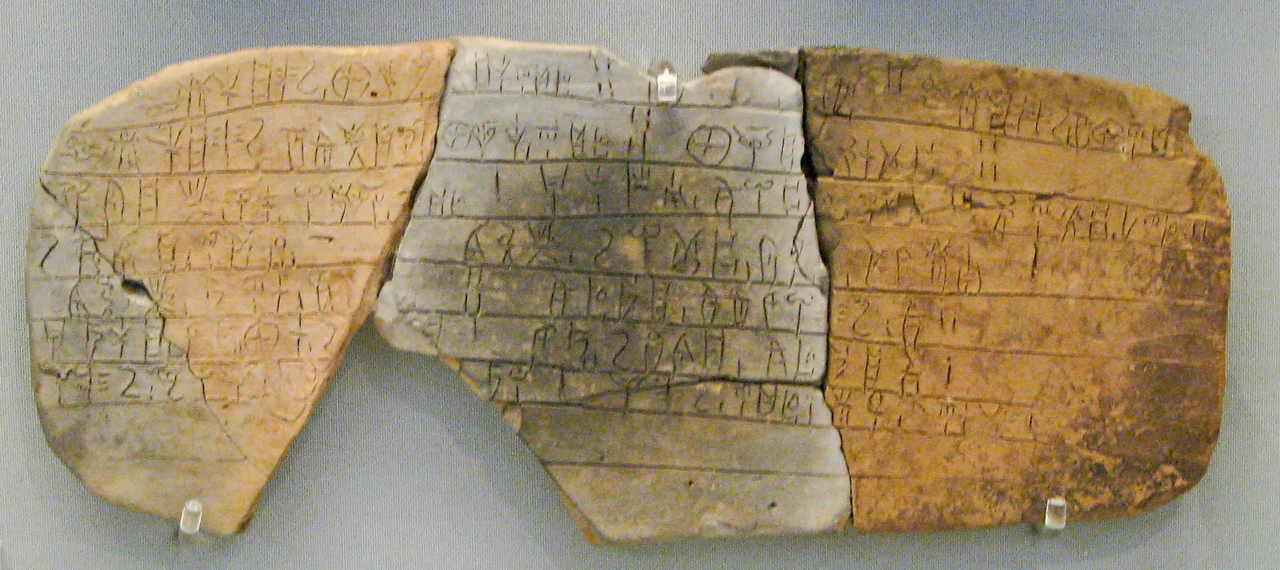
Image and metadata
Begin with an authoritative object record and capture its stable identifier, holding institution, side, page or folio, and image credit. Open a full-page image to establish orientation and layout. Then use a crop or zoom for the difficult line. The IIIF Image API supports region, size and rotation requests; a reproducible IIIF region is more useful in a note than “near the top.” Keep the full-page view available so that magnification does not hide adjacent text or physical damage.
Use multiple photographs, raking light, infrared or other modes only when supplied with clear imaging metadata. Increased contrast can reveal a faint stroke and also create false edges. A colour-processed image should never silently replace the original. Rights to view a repository image do not automatically grant permission to republish it; link to the holding collection unless the stated licence allows reuse.
Transcription and review
Make a diplomatic layer with line breaks, uncertain signs, omissions and corrections; record expansions and normalization in separate fields. TEI gives formal ways to encode these distinctions, while a carefully labeled notebook can do the same for a small exercise. Unicode encodes abstract characters, not every historical glyph variation. If the exact handwritten form matters to the argument, save an image region or description as evidence rather than relying on a font.
Handwritten-text recognition can speed initial transcription, but the IDP documents failures in binarization, segmentation and recognition on Dunhuang manuscripts. Run a human review at the image region for every uncertain or consequential reading. A machine score is not a palaeographic explanation. Record edits to the transcription so the next reader can see where an automatic proposal was corrected.
Practice
Choose one object from Michigan, the IAA, IDP, Oracc, the Peabody Museum or HMML. Produce a small evidence packet: repository link and identifier; full-page orientation; one reproducible crop or location description; three secure signs; one uncertain sign with two candidates; diplomatic line; normalized line if justified; and a short note on image processing or edition consulted. Another student should be able to retrace each decision without relying on your final translation.
Modern-language examples on this page clarify a linguistic pattern. They do not establish unattested sounds or forms for an ancient language. Follow the cited sources below and keep editorial readings separate from the surviving trace.