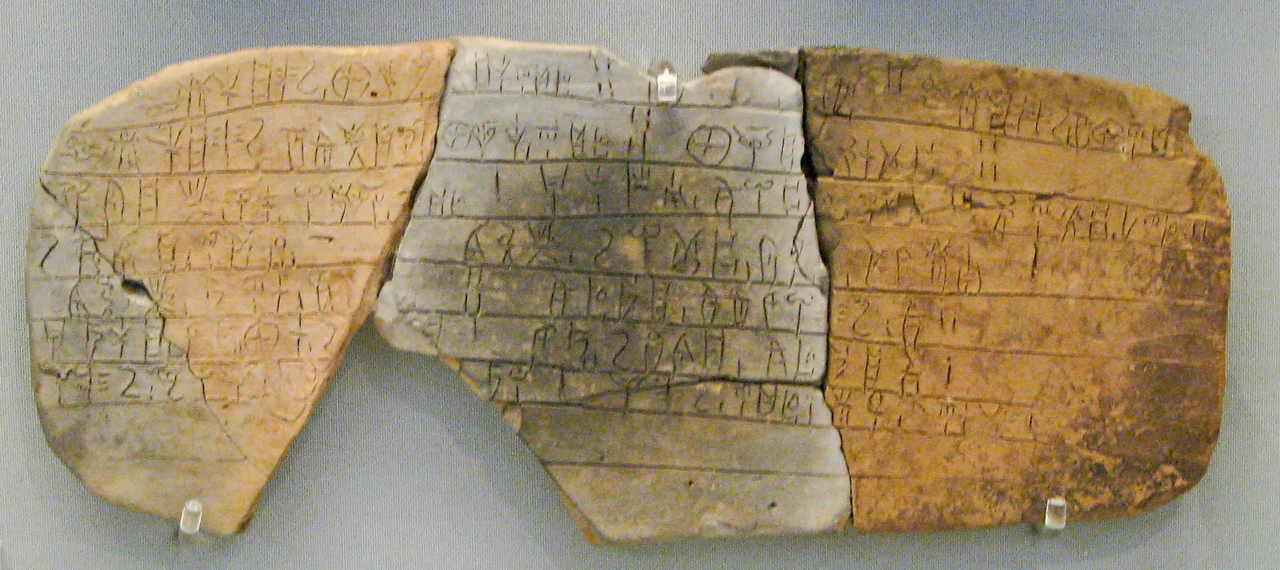
The written witness
Palaeography begins with a particular surface at a particular location, not with a font specimen. Record the object identifier, side, page or folio, column, line, and image region. Then describe the surviving trace: ink, incision, impression, fibre, abrasion, repair, or later mark. A reading such as “alpha” is a claim about that trace. A normalized word is another claim built on the reading. Good notes allow someone else to move back through those layers.
Three questions must stay apart. What marks can be seen? Which signs did a writer intend? What linguistic string do those signs represent? Damage may prevent the first answer; handwriting may make the second ambiguous; abbreviation or uncertain word division may complicate the third. In an edition, square brackets, dots beneath letters and other signs have discipline-specific meanings: read the edition’s conventions rather than assuming the marks are on the original.
A first reading protocol
Inspect the entire page before enlarging one letter. Note direction, ruling, columns, margins, line spacing, stains, holes and later additions. At normal scale, look for repeated groups and changes in hand. At closer scale, transcribe only the secure signs first. Compare the doubtful trace with at least two clear instances of the candidate sign in the same hand, preferably in similar positions. Check the other side or neighboring page when the writing continues there.
Make a confidence note tied to each uncertain sign, not a vague warning that the whole text is “hard.” A semantic guess can suggest a reading, but it should not erase the graphic evidence. Michigan’s P46 reader lets students reveal a diplomatic transcription after looking at the line image; Papyri.info connects editions with object metadata and sometimes images. Neither a transcription nor a search result is the original surface.
Practice
Open Michigan’s P46 reading exercise. Before revealing any transcription, select one line and write its image location, direction, secure letters and two doubtful traces. Draw or describe each doubtful trace, then compare the site’s alphabet of this scribe. Reveal the diplomatic text last. For each disagreement, state whether the issue was visibility, sign identification or later normalization.
Modern-language examples on this page clarify a linguistic pattern. They do not establish unattested sounds or forms for an ancient language. Follow the cited sources below and keep editorial readings separate from the surviving trace.