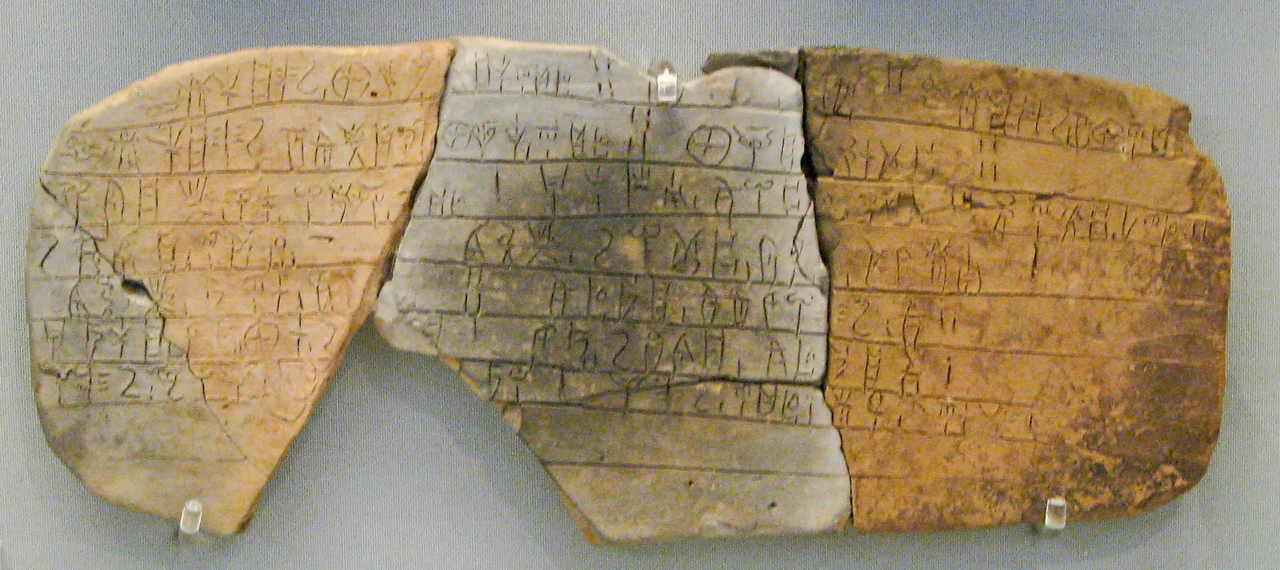
Blocks and surfaces
Maya writing is arranged in glyph blocks, with internal components and spatial relationships. A carving, painting and line drawing can make different features legible. The Peabody Museum’s Corpus of Maya Hieroglyphic Inscriptions documents monuments with photographs and detailed drawings, including the Yaxchilan volume. A drawing is an expert interpretation of a damaged surface; consult the photograph alongside it when possible. A glyph shape isolated from its block may lose reading order and evidence of neighboring components.
The Met’s seventh- to eighth-century cylindrical vessel 1983.543.3 carries a painted rim text in a style related to calligraphic book painting. It is evidence for a painted graphic tradition, not a surviving Classic-period codex. The pot’s curved surface also means that a flat photograph may show only part of the inscription at one time. Record the object and viewing path before comparing shapes.
Variant or different sign?
The same proposed reading may be represented by different shapes, and similar shapes may require different readings. Test a candidate through repeated contexts and published epigraphic analyses rather than treating visual resemblance as proof. For a broken block, record which component is visible and which is supplied by a drawing or reconstruction. Lighting angle, weathering and later surface loss can affect apparent contours. Peabody’s corpus is especially valuable because it preserves the documentary pair of image and drawing.
A font glyph is a standardized display form. It can facilitate search or teaching, but it cannot preserve all sculptural depth or painterly variation. Keep the original monument identifier and block location with any encoded or transliterated value.
Practice
Choose a Yaxchilan monument in the Peabody corpus that has both photograph and drawing. Select one complete and one damaged glyph block. List features visible in both, features clearer in the drawing, and marks that remain uncertain in the photo. Write a two-sentence note that separates observed contours from the drawer’s proposed reconstruction.
Modern-language examples on this page clarify a linguistic pattern. They do not establish unattested sounds or forms for an ancient language. Follow the cited sources below and keep editorial readings separate from the surviving trace.