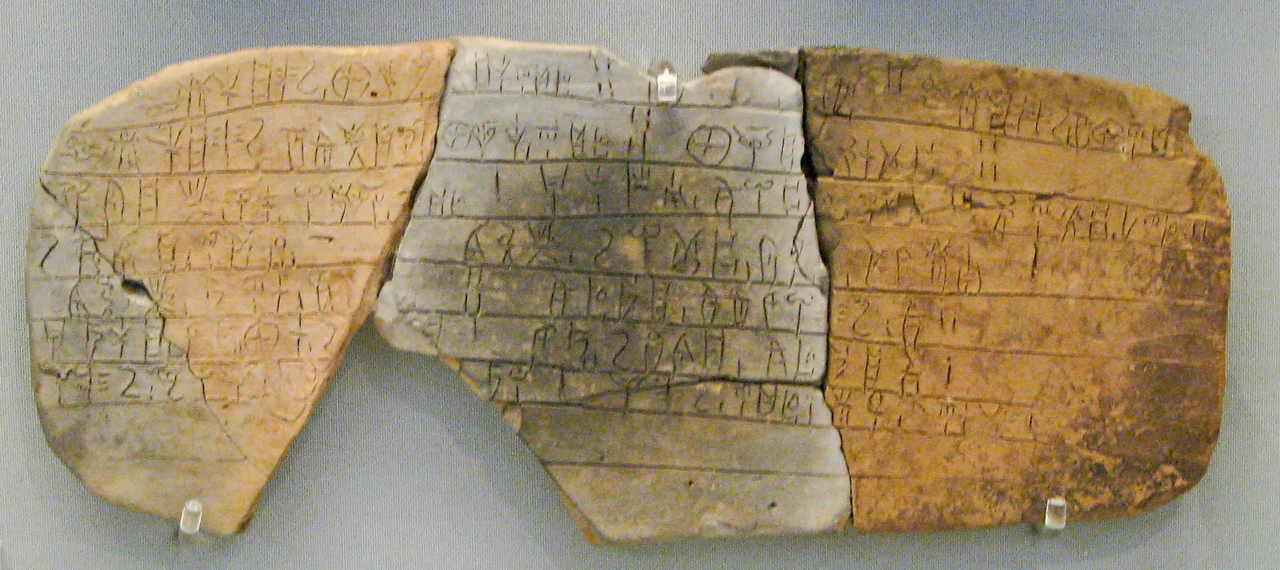
Scripts in the same collection
The Israel Antiquities Authority describes Dead Sea Scrolls written mostly in Hebrew, with Aramaic and Greek also represented. Most Hebrew scrolls use the standard Jewish script of their period, while a smaller group uses paleo-Hebrew. Some otherwise standard-script scrolls write the divine name in the older script. A script switch can therefore serve a local convention within one manuscript; it is not automatically evidence for a different language, date or writer.
The Authority also describes fuller spellings using letters such as aleph, he, waw and yod in some scrolls. Spelling practice and graphic hand are related evidence but not identical. An apparently long word can reflect orthography rather than a different lexical item. Retain the visible consonantal text and additions before comparing it to a later normalized Bible edition.
Fragments and additions
A fragment’s edge, line ruling and writing can help scholars test joins, but similar-looking letters alone cannot prove that two pieces belonged to one scroll. The IAA’s introductory pages show scribal additions. For an interlinear or marginal addition, record whether the mark sits in a planned space, whether its ink and letterforms match the main hand, and whether a later hand is plausible. Scriptural content may suggest a restoration, but it does not make lost ink visible.
Digital reconstructions should identify original fragments and any editorial placement. If the image is infrared or otherwise processed, retain the imaging mode in the note. A contrast-enhanced reading can be valuable while still needing independent inspection of the underlying trace.
Practice
From the IAA’s language-and-script overview, make a four-column distinction: language, script, spelling practice, and hand. Place its examples of standard script, paleo-Hebrew and fuller spelling in the appropriate columns. Then inspect one scroll image and describe a visible feature without assigning it a date from shape alone.
Modern-language examples on this page clarify a linguistic pattern. They do not establish unattested sounds or forms for an ancient language. Follow the cited sources below and keep editorial readings separate from the surviving trace.