People in records
Names, kinship descriptions, titles and ethnonyms can be precious evidence, but each belongs to a particular text and naming practice. A person’s name may be written in a language different from one they spoke at home. A Greek epitaph from Egypt or a Meroitic royal stela cannot by itself tell us the full language repertoire of all people nearby. Do not assign a fixed ethnic or linguistic identity from one spelling.
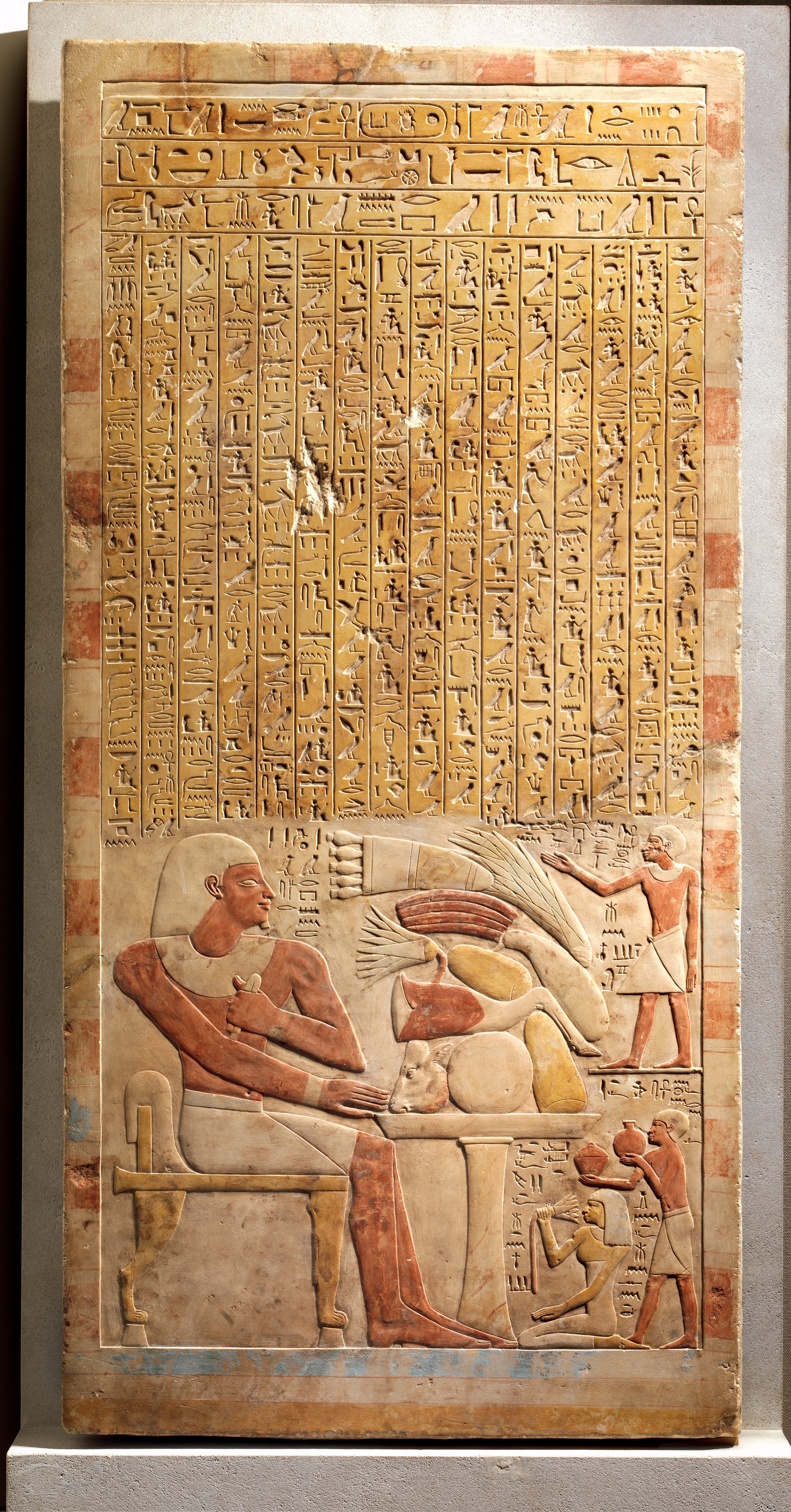
The British Museum’s Eumachos stele names a man and his father; Hamadab stela EA1650 names Queen Amanirenas and Akinidad. What the texts explicitly state should be transcribed before a historian infers family, office or political affiliation. Titles can be formulaic, names can be adapted to a script, and later museum records can use conventional modern forms. Keep the original written form, scholarly normalized form and English rendering separate.
Multilingual publication
The Rosetta Stone presents a decree in Egyptian hieroglyphic and Demotic scripts and in Greek. This is direct evidence of an institution preparing versions for distinct written traditions. It is not a survey of speech at Memphis or elsewhere. Likewise, the International Dunhuang Programme’s cave corpus includes texts in many languages because manuscripts circulated, were copied and were deposited over time. A multilingual archive is not identical to a multilingual individual.
Code choice can depend on addressee, genre, schooling and power. Where letters survive, compare the same writer across recipients if possible; where only official inscriptions survive, acknowledge the gap. Modern terms such as “mother tongue” and “ethnicity” can be useful questions, but ancient documents may not supply their answers. The archive’s silence should remain visible.
Responsible comparison
Avoid a single “culture explains grammar” story. Two communities may share a grammatical pattern without shared institutions; one community may use multiple registers and languages. Cultural analysis is strongest when it explains a documented distribution of forms across dated genres and settings, and weakest when it treats language as a timeless expression of an imagined national character.
Practice: draft a caption for a multilingual object. Name the languages and scripts only where the edition identifies them; distinguish the object’s place and its texts’ possible audiences; add a sentence beginning “This object does not establish…” to prevent a common overgeneralization.
Modern-language examples on this page clarify a linguistic pattern. They do not establish unattested sounds or forms for an ancient language. Follow the cited sources below and keep editorial readings separate from the surviving trace.