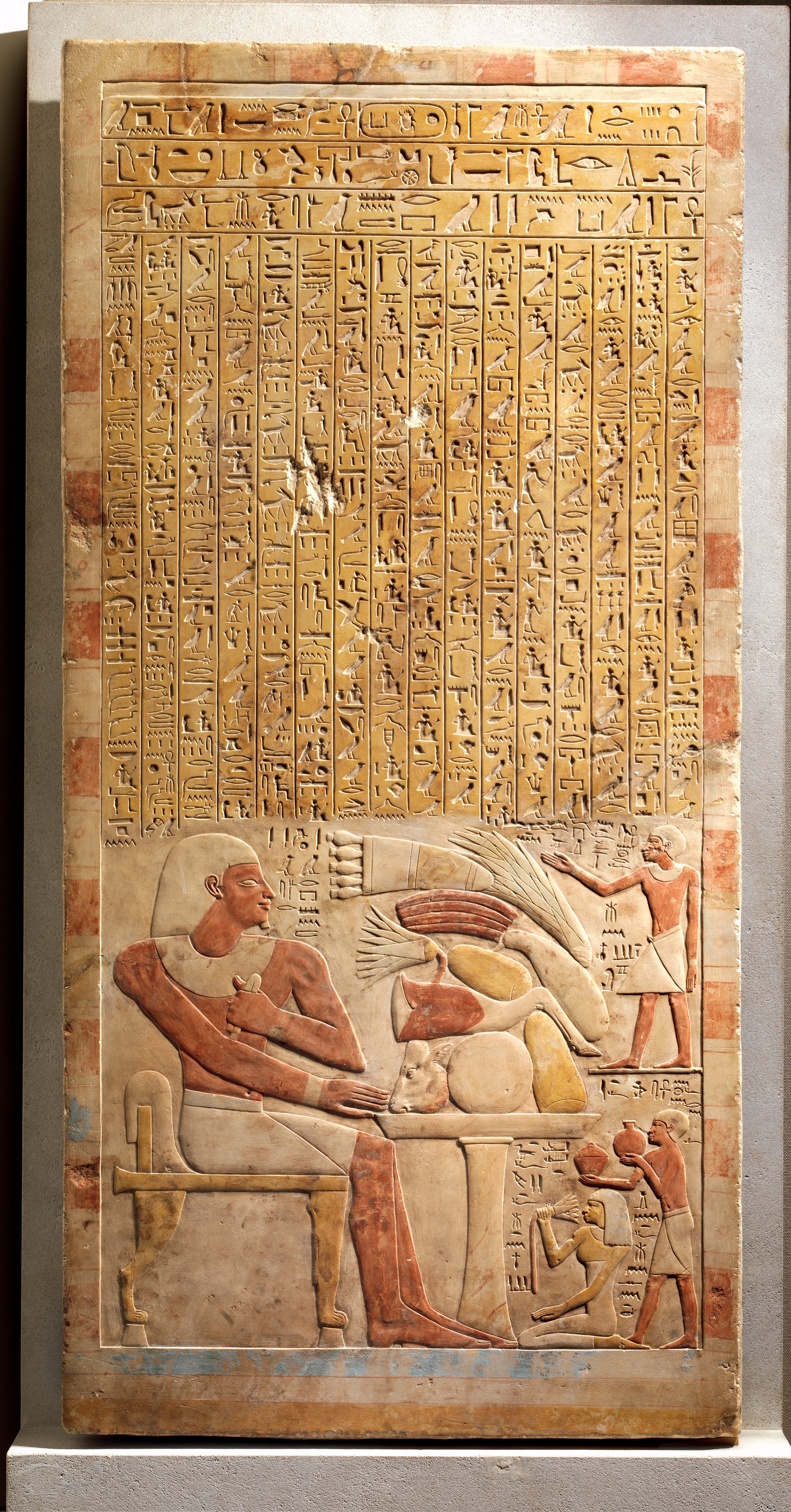
Commission and voice
A stone inscription may speak in the first person, yet production can involve sponsors, priests, scribes, sculptors and political institutions. Identify the grammatical speaker separately from the person who commissioned the object and the people who carved it. A royal name in the text does not automatically settle all three roles. Public language is shaped by what the sponsors wanted to announce and by the norms of the institutions that could produce an expensive object.
The British Museum describes the Rosetta Stone as one copy of a priestly decree honoring Ptolemy V. Its final instruction calls for the decree to be set up in temples. This gives an unusually clear publication context. The three written versions are evidence for a multilingual institutional presentation; they do not prove every temple visitor could read all three. The intended audience and the actual readers are separate historical questions.
Monuments across regions
The Metropolitan Museum of Art describes Ashoka’s edicts carved on rocks and pillars across the Mauryan empire. The British Museum’s Hamadab stela records Queen Amanirenas and Akinidad in Meroitic cursive, with a relief scene and royal imagery. Its Yaxchilan Lintel 24 joins glyphs to a dated royal ritual scene. These monuments differ in language, form, political setting and survival. The comparative lesson is methodological: titles, dates, images and installation all help define the communicative act.
Do not infer that all inscriptions are propaganda in the same sense. A funerary text, boundary marker, legal decree and royal victory account have different formulae and interests. Even within a political inscription, a title can be a formal office, praise, kinship statement or later restoration. Trace the exact wording, line and object rather than filling gaps from a generic picture of monarchy.
Audience and placement
A large inscription may be visible to many but legible only to some. Script size, height, lighting and location matter; so do oral reading, copying and translation, though those activities require independent evidence. A photographed object shown at eye level on a website may not reproduce how it was encountered originally. Record original findspot and whether the object was found in place, moved or re-used.
Practice: compare Rosetta Stone EA24 and Hamadab stela EA1650. Note producer or commissioner where established, script, medium, imagery, original placement and modern provenance. Then write two interpretations each object supports and two questions it cannot answer. Do not equate the two monuments simply because both are stone.
Modern-language examples on this page clarify a linguistic pattern. They do not establish unattested sounds or forms for an ancient language. Follow the cited sources below and keep editorial readings separate from the surviving trace.