A path through the text
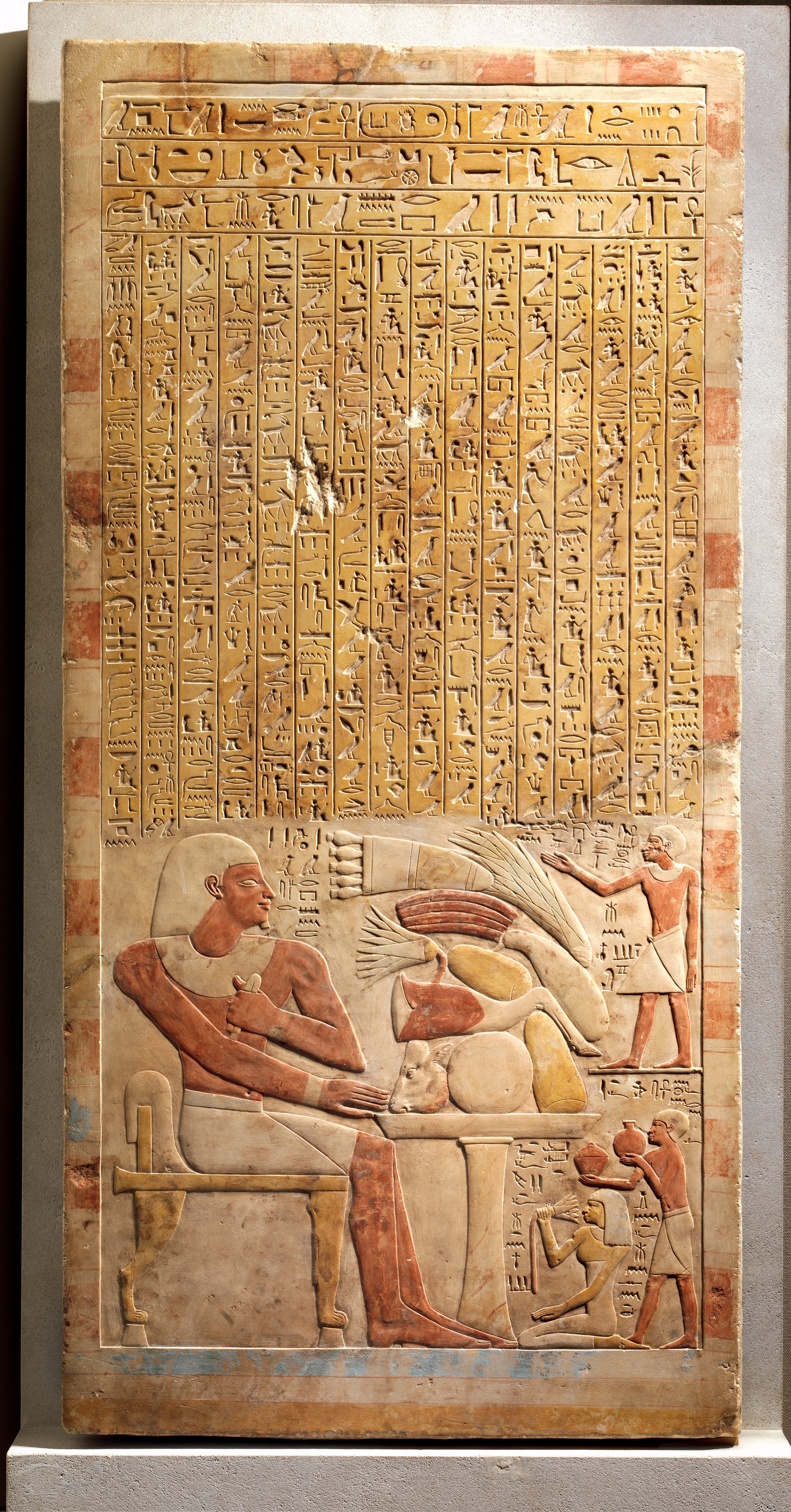
Identify the inscribed field, beginning of each line or column, direction within it and order between fields. A decorative frame, image, change of hand or ruling can mark a new unit. An edition that prints text as a continuous paragraph may hide the line breaks, word division, paired panels or space left blank on the object. Number physical lines before translating; keep surface and line identifiers attached to every reading.
Some inscriptions are boustrophedon, from Greek words describing an ox turning at the end of a ploughed furrow. Successive lines alternate direction; early Greek letters can change orientation with the line. The first line's direction still has to be established from the actual inscription. The British Museum's early Greek stela and the PHI record for an Ambrakia funerary inscription provide documented examples. A left-to-right digital transcription straightens the path but should not erase it.
A reading-order sketch
Draw arrows over a copy of the object: one arrow for each line and another for the sequence of columns or faces. Distinguish the orientation of individual signs from the order of whole lines. For the Rosetta Stone, the three stacked script blocks are separate renderings of a decree, not three columns to be read across row by row.
Practice: before reading a published Greek boustrophedon transcription, mark the successive line directions on the object image or diagram. Compare the result with the editor's normalized layout and note which visual features the printed text loses.
| Physical line | Direction if line 1 begins at left | Reading action |
|---|---|---|
| 1 | → | Read across the first line |
| 2 | ← | Turn and read back across |
| 3 | → | Turn again and continue |
Modern-language examples on this page clarify a linguistic pattern. They do not establish unattested sounds or forms for an ancient language. Follow the cited sources below and keep editorial readings separate from the surviving trace.