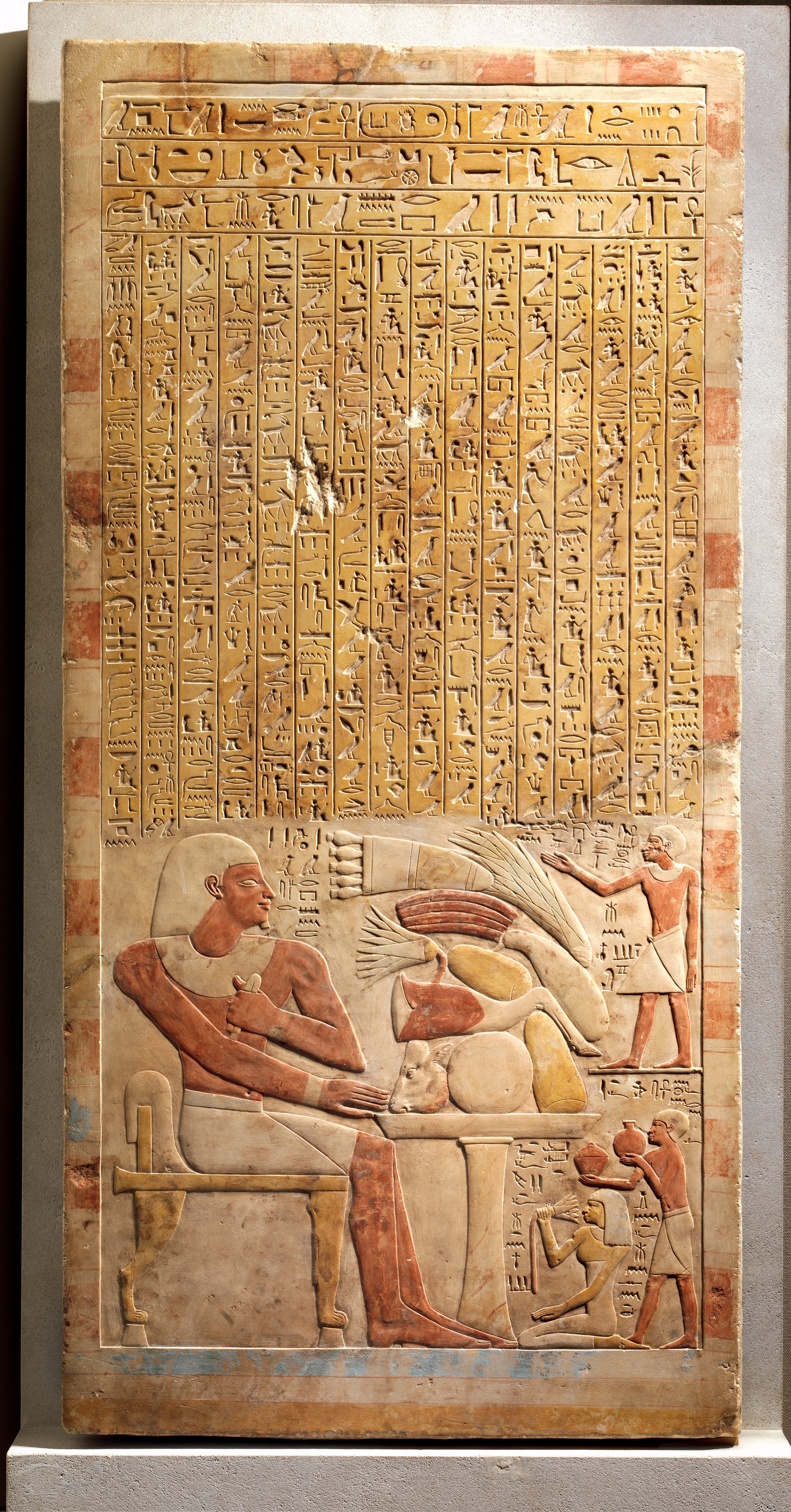
Support and writing
An inscription is writing placed on or into a material support: stone, metal, clay, ceramic, plaster, wood, bone or another surface. It may be carved, impressed, scratched, painted, stamped or inlaid. The technique determines what a stroke looks like and what kinds of wear can remove it. Epigraphy studies that written evidence with its object and setting. A typed transcription is a research tool, but it cannot show the weight, height, location or later alterations of its support.
Start an object note with material, form, dimensions, present state, inscribed faces and current location. Record whether it is a whole object, fragment, reused building stone, modern cast or squeeze. EpiDoc's physical-description guidance explicitly separates support, text field and letter description; it is a useful checklist even when no XML is written.
A stela as a fragment
The British Museum identifies the Rosetta Stone as part of a granodiorite stela, accession EA24. Its object record distinguishes the physical fragment from the priestly decree inscribed upon it. It also records three blocks of writing: hieroglyphic, Demotic and Greek. The missing upper portion affects the first block especially; counting surviving lines is not the same as reconstructing the complete original monument.
Practice: from the EA24 object record, write two sentences that can be checked against the stone's material and surviving layout, then a third sentence about the decree's historical purpose. Label that third sentence as interpretation of the text and its context, rather than an observation about a groove.
Modern-language examples on this page clarify a linguistic pattern. They do not establish unattested sounds or forms for an ancient language. Follow the cited sources below and keep editorial readings separate from the surviving trace.